|

Need assistance?
Contact Sales: 1.877.394.8826 Contact Customer Support: 1.800.833.9844 or Chat with a Support Representative
 Toggle Nav



Carolina Academic Press Products
Access Carolina Academic Press products for authoritative resources in legal academia.
1111 results


-
 View Details
Aging in Prison: The Integration of Research and Practice
Publisher: Carolina Academic PressISBN: 9781531006921In Aging in Prison: The Integration of Research and Practice, author Martha Hurley takes an in-depth look at the complex issues associated with housing long-term and elderly prisoners.$ 25.60 -
 View Details
Alabama's Criminal Justice System
Publisher: Carolina Academic PressISBN: 9781531000776Alabama's Criminal Justice System is a compilation of original chapters by experts in the Alabama justice system.$ 34.50 -
 View Details
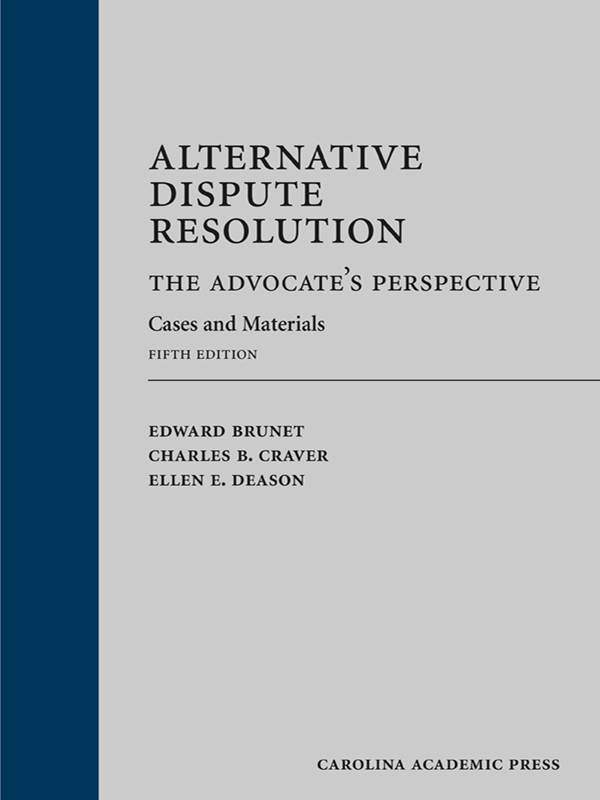
Alternative Dispute Resolution: The Advocate's Perspective: Cases and Materials
Publisher: Carolina Academic PressISBN: 9781632815453This edition updates and reassesses the Big 3; of dispute resolution, negotiation, and mediation. Arbitration chapters provide coverage of new major cases, including DIRECTTV and Concepcion. New note materials raise serious questions about these cases and challenge the notion that there exists a national policy favoring arbitration.$ 128.00 -
 View Details
American Conflicts Law: Cases and Materials
Publisher: Carolina Academic PressISBN: 9781531013561This edition of American Conflicts Law: Cases and Materials continues the organizational pattern of the Seventh Edition, along with the problem approach adopted there.$ 168.00 -
 View Details
American Constitutional Law
Publisher: Carolina Academic PressISBN: 9781531009519This book, in addition to analyzing and including excerpts of court decisions, highlights the efforts of legislatures, executives, the states, and the general public to participate in an ongoing political dialogue about the meaning of the Constitution.$ 106.50 -
 View Details
American Constitutional Law and History
Publisher: Carolina Academic PressISBN: 9781531027254American Constitutional Law and History is structured based on the belief that law students are best served by reading and assessing in detail the majority, concurring, and dissenting opinions written by Supreme Court justices.$ 142.00 -
 View Details
American Constitutional Law, Volume One: Constitutional Structures: Separated Powers and Federalism
Publisher: Carolina Academic PressISBN: 9781531009533This book, in addition to analyzing and including excerpts of court decisions, highlights the efforts of legislatures, executives, the states, and the general public to participate in an ongoing political dialogue about the meaning of the Constitution.$ 57.60 -
 View Details
American Constitutional Law, Volume Two: Constitutional Rights: Civil Rights and Civil Liberties
Publisher: Carolina Academic PressISBN: 9781531009557This book, in addition to analyzing and including excerpts of court decisions, highlights the efforts of legislatures, executives, the states, and the general public to participate in an ongoing political dialogue about the meaning of the Constitution.$ 65.60 -
 View Details
American Indian Children and the Law: Cases and Materials
Publisher: Carolina Academic PressISBN: 9781531014612There are more than 500 American Indian tribes in the United States, and the health and welfare of American Indian children is the primary focus of those tribal nations.$ 97.50 -
 View Details
American Indian Law: Native Nations and the Federal System
Publisher: Carolina Academic PressISBN: 9781632809698American Indian Law: Native Nations and the Federal System surveys the tribal-federal relationship. It is primarily devoted to the study of federal Indian law, i.e. the federal law developed to regulate the tribal-federal relationship. This book pursues a broad perspective, merging jurisprudence, history, comparative law, ethnology, and sociology to bring meaning to the tribal-federal relationship.$ 129.99

